

News
Interview Murray Sheldon
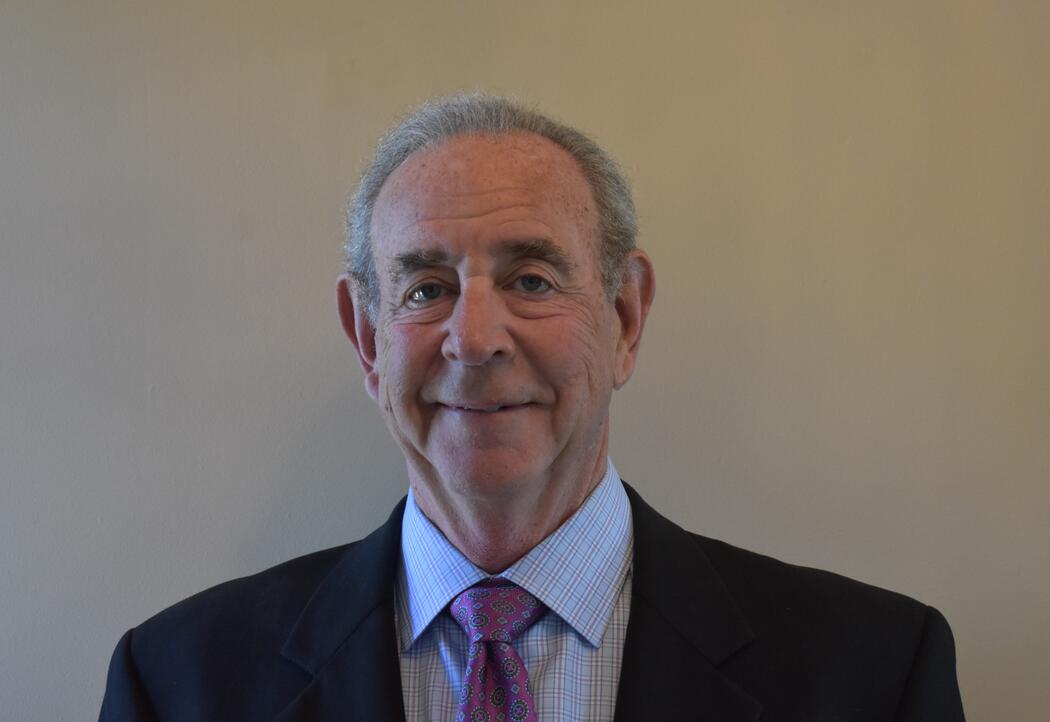
Dr. Murray Sheldon is Associate Director of Technology and Innovation at the FDA and leads the Medical Device Payer Communication Task Force. Before joining the FDA in 2013, he worked in several roles developing Medical Devices and providing expert consultancy services to innovators.
On 2 June 2021 Dr. Sheldon will speak at the online Global Access to Innovations in Healthtech (GAINH) Summit. This summit organized by EXCITE international and Health Innovation Netherlands (HI-NL) will bring together stakeholders from all over the world in the field of Healthtech innovation. Dr. Sheldon will speak about global access to innovations from a regulators’ perspective.
In this interview Dr. Sheldon shares his views on innovation and related challenges for innovators ahead of the GAINH Summit.
What is the FDA focusing on to stimulate valuable innovations?
I am the head of the CDRH innovation team, and I have several staff that are focused on payer communication, recognizing that major complaints of startups as well as large companies are not so much marketing issues. In the past, the FDA had been challenging to work with for innovators, requiring a lot of time and money to get authorization to market their product. Over the last 10 years or so that has improved dramatically and the FDA appears to no longer be the main hurdle to patient access to innovative products. Currently coverage and payment issues, from public and private payers alike are the biggest hurdles. As FDA’s vision is for patient to have access to safe and effective medical devices, market authorization is insufficient for access if coverage and reimbursement is lacking.
We feel it is critical for device developers to interact with payers in advance of developing their clinical trials, and even in advance of finalizing their product design, to ensure that they understand what payers are looking at as well as their requirements to provide coverage and payment.
Another focus of our activities is patient input. Patient preference surveys can be utilized to help inform regulatory decisions. For example, patients may be willing to accept certain risks of a new innovative product as trade-offs for potential benefits - something we can take into account when making a decision. Or for certain products intended to diagnose or treat life threatening or irreversibly debilitating conditions we may put products on the market earlier, especially if there are no or inadequate alternatives, and allow patients to have access and continue to study them in the post-marketing phase. We take this approach in some of our newer programs like the Breakthrough Devices Program and for non-life threatening conditions, the Safer Technologies Program (STeP).
The third topic we work on a lot is to improve the education of our entire staff. It is the small startup companies that usually develop the vast majority of innovative products and then get picked up and sold to large companies. Many of our staff have limited experience in the start-up environment. Product development for a startup with no income is quite different than product development for a large company that is making a substantial income every year. So, we educate our staff to understand what the challenges are for these small startups, for example by sending them to shadow some of these companies to learn from them directly.
What support or advice do innovators need most?
There are two types of innovators, the small startups and large companies. The majority of the ones that I am talking about are small startups. They typically don’t have extensive knowledge about the rules of FDA regulations, so what those innovators need is frequent contact and communication. They need to learn about the regulatory systems, as well as coverage, coding and payment from insurance companies or other approaches. They often need a little bit more handholding than companies who have developed products routinely for many years and have the resources to hire regulatory consultants to help them.
The other type of innovators are the large companies. Most of them purchase an innovative product from the smaller companies and then begin to refine it and commercialize it. Without the pipeline from those small startups, the larger companies might not have as rich a source of innovation products. So, what I say often is: communicate early and often with the FDA in the U.S., or the notified bodies in Europe or whoever you need to talk to in your region - and be honest. We can provide a lot of advice and help in the development, for example by asking questions like ‘Hey, you have not looked at bio compatibility in this way?’ ‘What about including a human factors study?’
Tell us your problems so we can help with solutions. And listen to our advice. We are not trying to fool anybody; we are trying to help you develop a better product.
What do you consider the most important stakeholders for innovation?
The most important stakeholders are really our patients. Too often we either do not understand the patient's needs, or we do not even ask. An interesting example in the kidney space is an initiative called the SONG (Standardised Outcomes in Nephrology) initiative. SONG developed a survey for patients with severe kidney disease, most of them on dialysis, and their physicians. The survey included a list of 20 aspects of the disease and was asking people what they considered most important. The responses from doctors and patients were quite different.
Doctors of course were interested in mortality rates, in glomerular filtration rates, or in patients’ laboratory data of their creatinine and how they were doing on their dialysis. But the patients were not particularly interested about that.
They wanted to know why they cannot sleep at night, why their skin itches and how they can get back to work. So, they have a very different perspective on what is important to them. Understanding what is important to patients and including that information in your clinical trials is absolutely critical. If patients don’t feel that the clinical trials are addressing their needs, they are not likely to enroll.
But if you really focus your clinical trials on patient needs and wants, patients will enroll faster, and you will retain them in the trial. You will not have missing data and many, many years and millions of dollars or euros wasted. So, the patients are really at the center, at the heart of absolutely everything we do.
But of course, all the other stakeholders including regulators and payers are important too. Not enough gets said about engineering and material science, especially for devices that may be implanted. For diagnostic devices, we often have to pay a lot of attention to their intended use. It is understanding the entire ecosystem that is essential. The reality is that when you have breaks within that ecosystem, everything falls apart just like any other chain. In the end, all the stakeholders are critical.
What is essential to bring an innovation to the market internationally?
I think it is helpful if you can work in the country where you are developing the product. So, if your company is in Germany, try to develop your device first in Germany. If your company is in the United States, try to develop there. If for no other reason than the issues of travel, time and expense to do that.
In the end there are many places around the world to develop devices and they all have their advantages and disadvantages. The most important thing is to learn as much as you can about them and communicate with each group early and often. There was a time when people were absolutely afraid to talk to regulators. They would think that if they talked to a regulator early, before having enough information, it might result in a negative mind-set - and maybe that was true in the past. But it is certainly not true today in the US, and I do not believe it is true today in Europe either.
Usually, you will market your device first in the country where you do your animal and initial clinical trials. This is where you probably engage physicians early on, who then understand your product and can help think along with you in your development. And if your product is good in one patient population in Europe, there might be a reasonable likelihood that it might be safe and effective in other populations.
During the GAINH summit you will speak about bridging the gaps. What are the main gaps in your opinion?
Well, the biggest gap currently is the gap between regulatory approval and payer coverage, and payment and physician adoption and patient acceptance. Those gaps are there because they are often not discussed or addressed in the planning. The time and cost of medical device innovation is often very prohibitive. It is extremely expensive; even for fairly simple medical devices you are talking about millions of dollars. Somebody may have a good idea, but they may not have millions of dollars, or infrastructures like laboratory space.
Time is money. If you can shorten the development time by a year or two, you will often save 10-20 million in your development process. And if it costs less to develop your product, you can sell it for less and get it out to patients more quickly.
The international gap is another gap that we have really exposed. Many companies will focus on one area or one geographical location. Organizations like EXCITE or HI-NL bring the essential stakeholders together to start bridging that gap.
The Global Access to Innovations in Healthtech (GAINH) Summit will take place 2-3 June 2021. It is an online event that will be live streamed from Amsterdam, the Netherlands. More information and registration are available through this link.